Luoyang Bridge: Key points and local experience
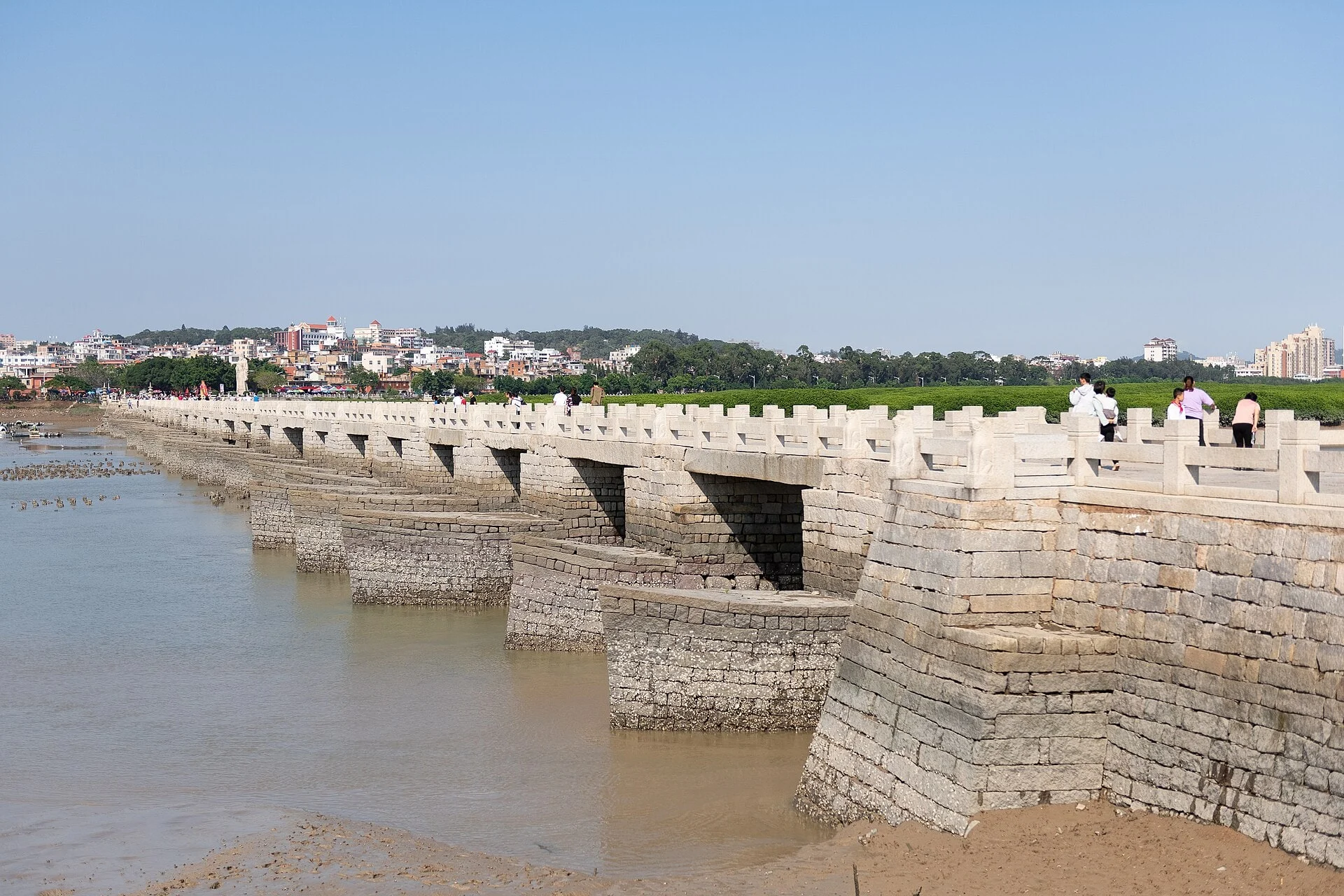
The explanation of Luoyang Bridge focuses on five things: the construction logic of the raft-shaped foundation, the bioengineering of planting oysters to consolidate the foundation, the historical facts of Cai Xiang's presiding over the construction of the bridge, the rise and fall of the towns in the north and south of the bridge, and the structure of the bridge piers that can only be seen clearly at low tide.
To see the bridge, you must stick to the tide. During low tide, it is best to "plant oysters to consolidate the foundation"; the north-south movement of the bridge is about 1.5 kilometers.
5 key points to explain Luoyang Bridge
These 5 items are things that tourists usually cannot remember after walking, but can take away after listening to them:
- Raft foundation is not "piling"——The bridge site is a silt river bed. The craftsmen used riprap to form a weir and then build bridge piers to deal with the soft foundation. This and piling on hard rock are two engineering philosophies.
- Seed oyster solid foundation is bioengineering——Cultivation of oysters on bridge piers, using calcium secreted by oyster houses to bind the loose stone foundation into a whole, is a rare early engineering case in the world
- Cai Xiang is a local official, not a god——Cai Xiang presided over the construction of the bridge as the governor of Quanzhou and took notes. His contribution lies in the organization and fundraising mechanism, not personal deification.
- Towns north and south of the bridge prospered because of the bridge——The commerce in the south of Qiao and the settlements in the north of Qiao have become nodes due to the ferry. When looking at the bridge, one must also look at the town pattern on both sides of the strait.
- Tides determine what you can see——Only the bridge body can be seen at high tide, and only the bridge piers, tidal flats and oyster houses can be seen at low tide. The explanation period is arranged according to the tide table.
When is the best time to talk about this place?
See the bridge piers and tidal flats during low tide; the light is soft before 9 a.m. or in the evening, and the reflection of the stone slabs at noon is dazzling
Tips from locals
- Check the tide table the day before departure. It is best to arrive at the bridge 1 hour before low tide.
- The stone slabs on the bridge are reflective, so wear a hat and sunglasses at noon; walking around the bridge from north to south is about 1.5 kilometers
- The task list for the study project chain can be found at /study-tour/cities/quanzhou/. It is unrealistic to arrange it on the same day as the Changpu life chain.
Regarding the high-frequency issues of Luoyang Bridge
- Can we walk through Luoyang Bridge and Zhangpu in half a day?
- Time can be saved, but you have to rush both sides. Neither the engineering chain nor the life chain can be seen through; it is recommended to separate or take the two-day line.
- When is the best season to see the bridge?
- April-June and September-November are comfortable; the tidal flats are dangerous and windy during typhoon season, and the long low tide period in winter is suitable for viewing project details.
Data source
The data on this page is verified as of 2026-10. The types and calibers are as follows.
- Culture and Tourism BureauQuanzhou Municipal Culture, Radio, Television and Tourism Bureau